D//Am0re (2025-present)

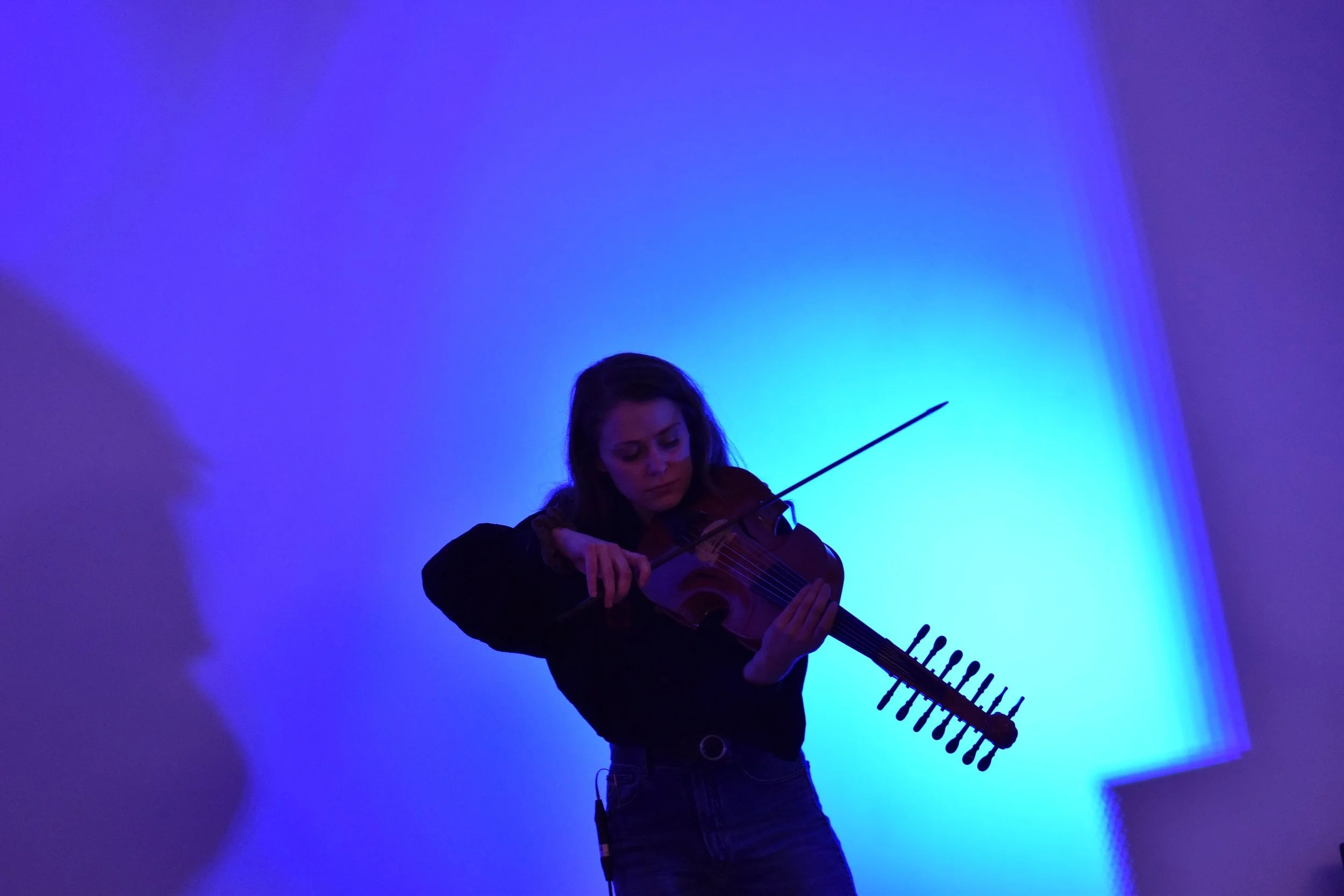
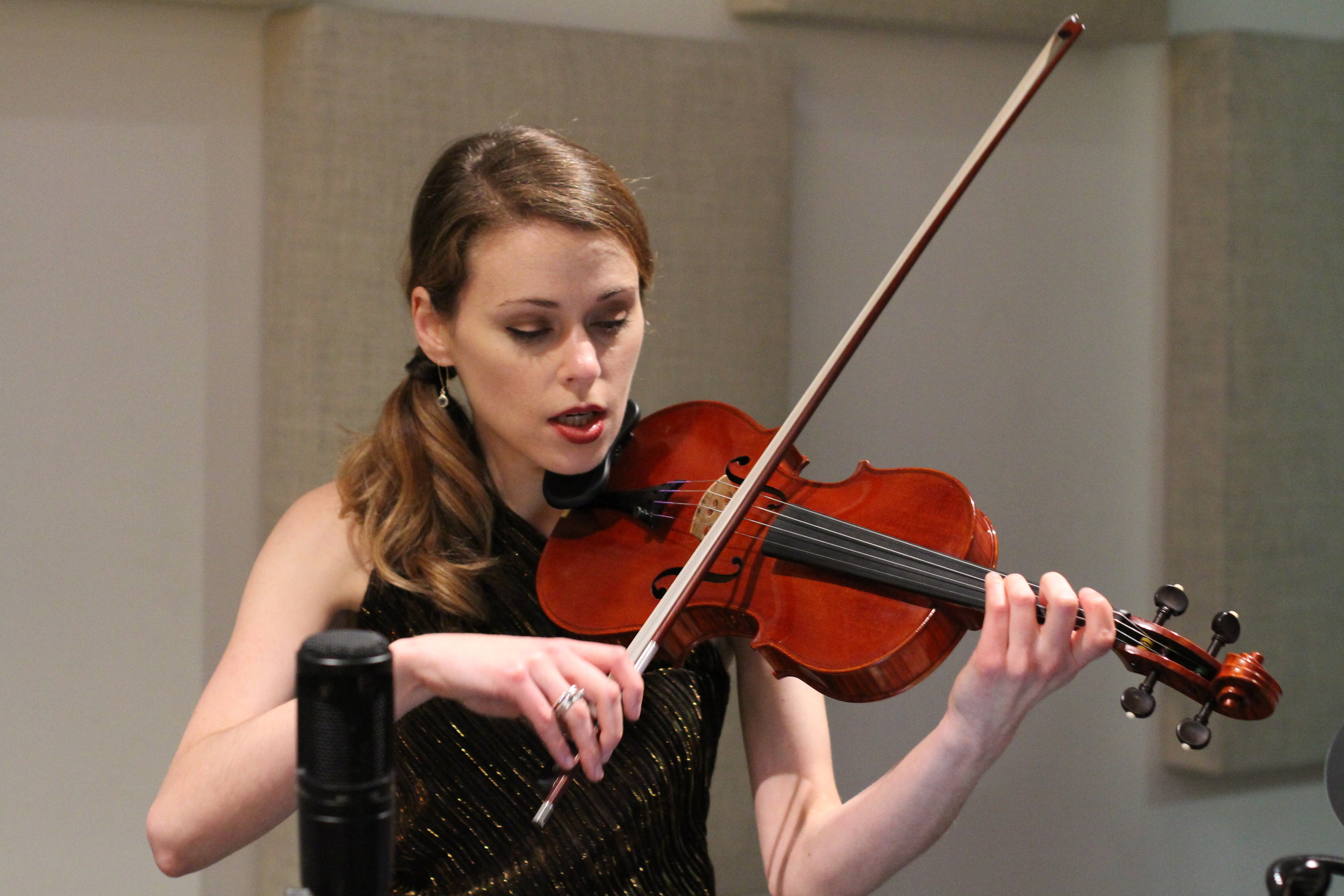
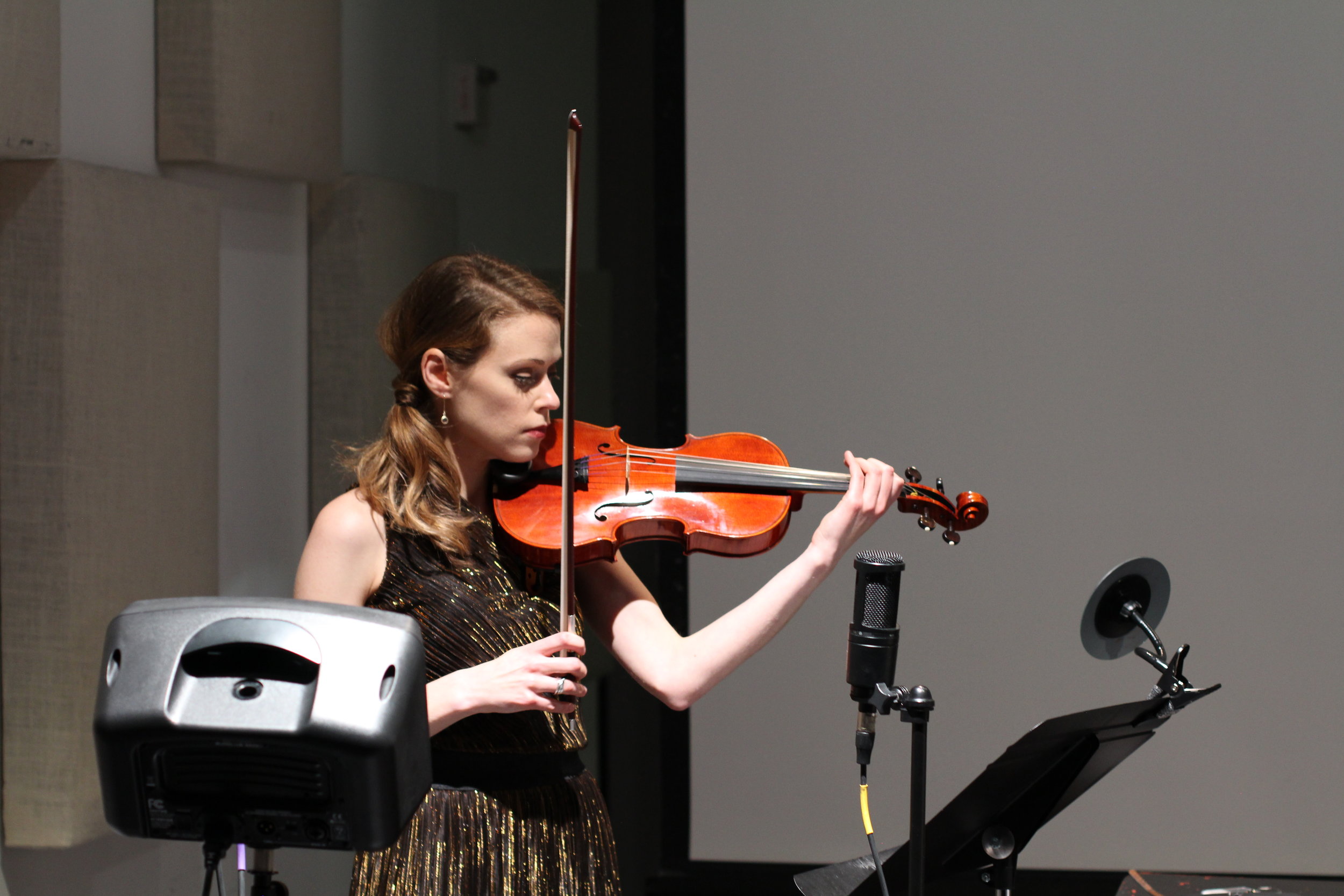
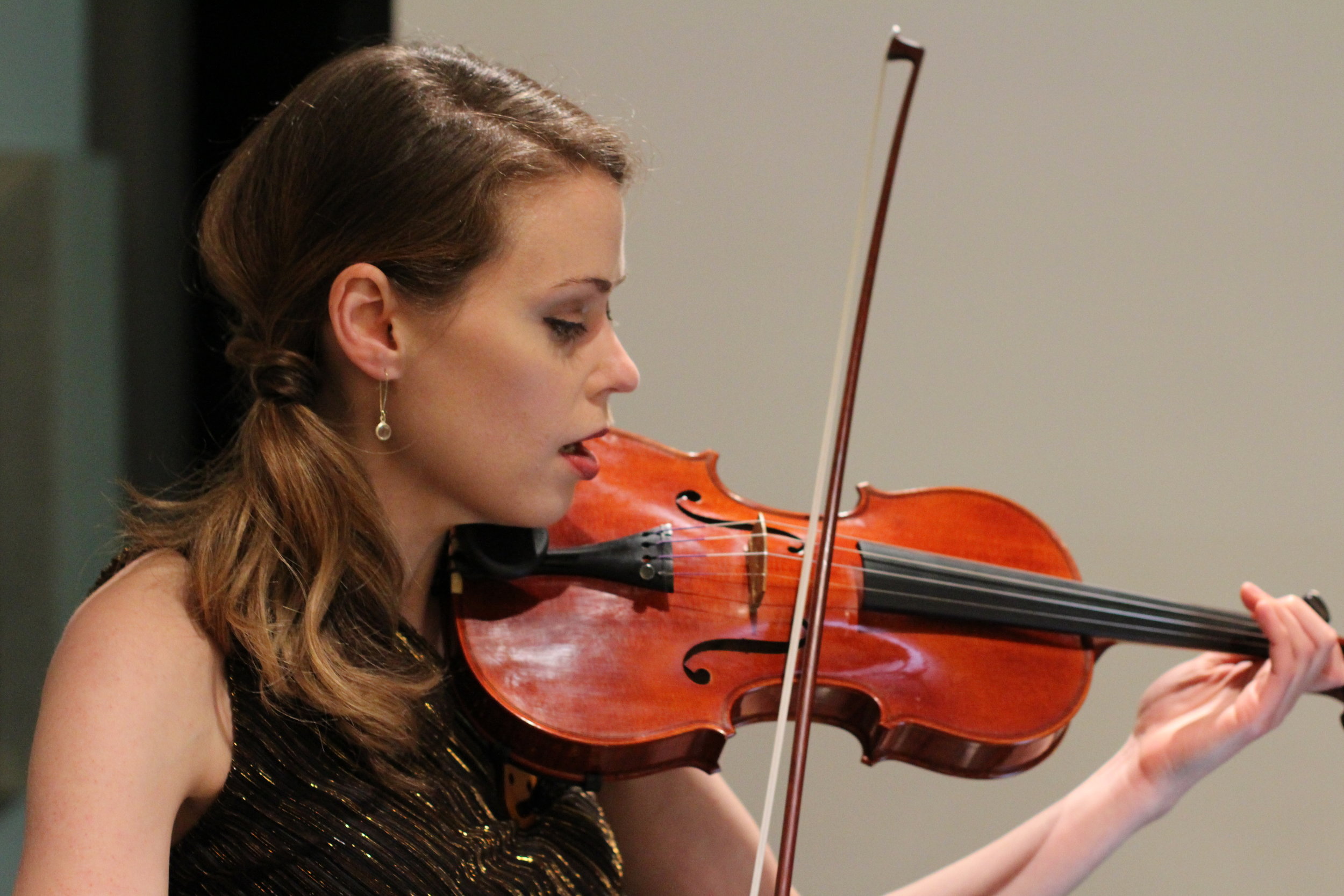
D//Am0re is an artistic research project exploring the augmentation of the viola d’amore (or other instruments with sympathetic strings) through electromagnetic resonance and custom hardware. Led by Leslee Smucker (violinist and composer), Johan van Kreij (composer and creative coder), and Siavash Jafari (composer and hardware developer), the project investigates how historical instruments can be adapted for contemporary performance practices. By developing a device that activates and manipulates sympathetic strings in real time, the team explores new possibilities for polyphony, interactive performance, and hybrid musical approaches. The methodology involves hands-on hardware experimentation, iterative testing, and performative demonstrations, contributing to discourse on acoustic augmentation and digital lutherie. D//Am0re ultimately seeks to establish a framework for future instrument augmentations, expanding the sonic and expressive potential of historically rooted instruments in digital culture.

D//Am0re is supported by Stimuleringsfonds Starting Grant
Buzzing Strings (2022-present)

Unravelling Resonances: Perpetual Becoming through Instrumental Adornment

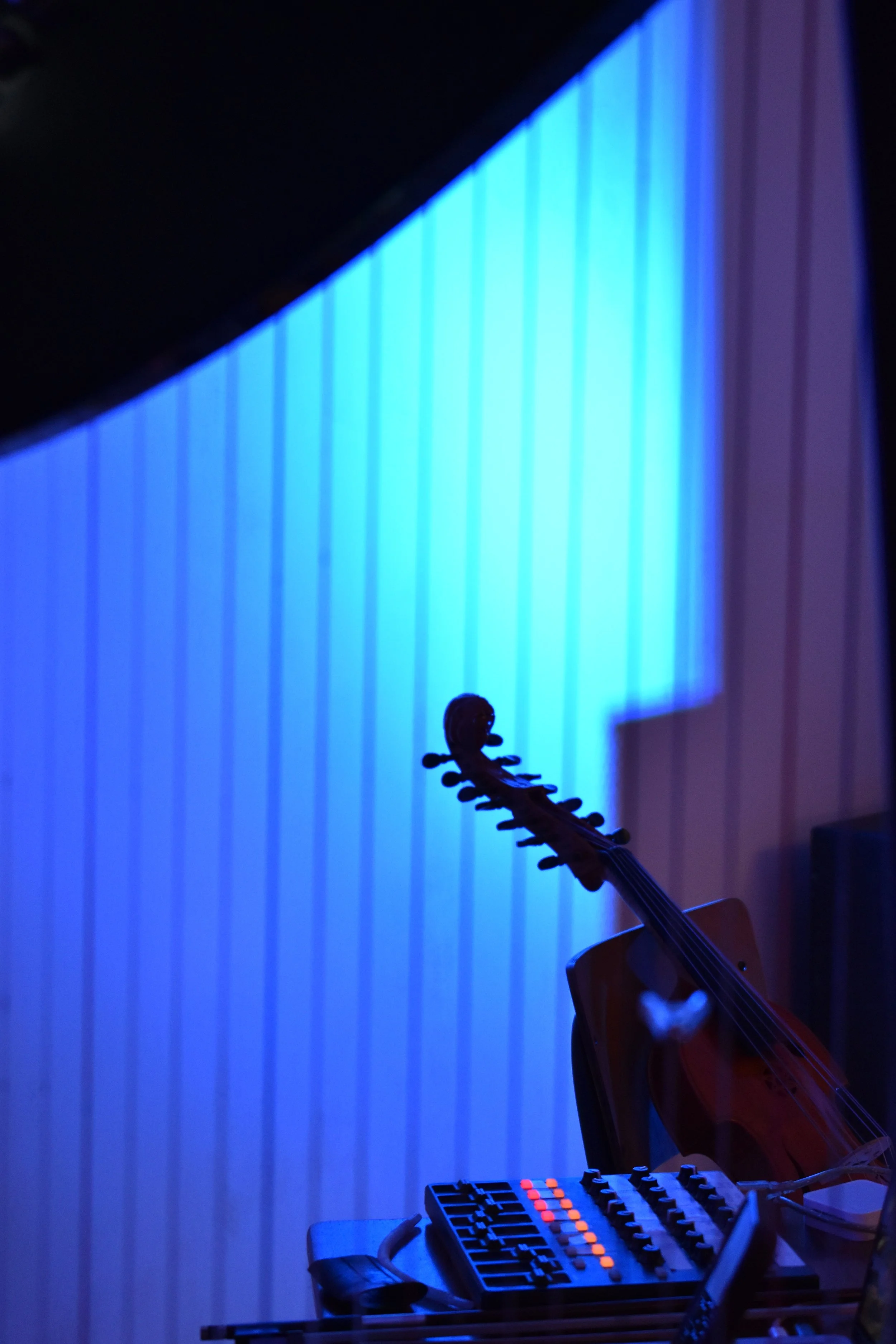
This project focuses on unraveling resonances through a perpetual state of becoming, conceived through the design and implementation of custom resonators for string instruments—handmade metal resonators, electronic resonators, and other technological means. By embracing unpredictability, these instruments redefine artistic interaction and facilitate a nomadic exploration of sound. Resonators in this context are not merely sound modifiers but interventions that reshape the evolving relationship between performer, instrument, and sonic materiality. 

Theoretical underpinnings of my research align with studies surrounding process as unfolding potentialities of form and matter. This concept aligns with Gilbert Simondon’s idea of ontogenesis as well as a host of other philosophers dealing with perpetual becoming including Donna Haraway, Rosi Braidotti, Karen Barad, Jane Bennett, and Erin Manning. This theoretical grounding provides a lens through which I examine past resonator-based and prepared-instrument practices, tracing a lineage of experimental approaches to instrumental transformation, including composers such as John Cage, Alvin Lucier, Helmut Lachenmann, Clara Iannotta, and  Giacinto Scelsi.

While many prepared-instrumental practices utilize found objects, Giacinto Scelsi’s work is an example of a resonator designed and crafted specifically for particular instruments. Inspired by Scelsi’s craft, my project engages further with the craft of designing bespoke resonators—both as a means of sonic augmentation and as a form of instrumental adornment. Jane Bennett’s concept of "vibrant matter" applies here; metal is not merely a passive object but a co-agent in sonic production, influencing resonance and tactile engagement. By introducing these crafted resonators, this project aligns with Rosi Braidotti’s concept of nomadic transformation as the instrument (both its physical body and conceptual role) undergoes a continuous process of material and sonic redefinition.Research Catalogue Exhibition The project “buzzing strings/Resonant Beauty” is about exploring aesthetic choices related to tone production in string instrument playing, especially violin playing. I wanted to explore possibilities of sound conceptualized as beautiful, and challenge my learned concepts as what qualifies as a ‘beautiful’ tone production, the make and sound of an instrument, and testing biases that have been taught to me through western classical musical pedagogy and canon.

Alternating Lunes (2025-Present)

Alternating Lunes is a project of collaboration between Siamak Anvari, Kevin Toksöz Fairbairn, and Leslee Smucker. All three artists involved in this project work with non-traditional approaches to instruments and sound. Leslee Smucker has developed a series of metal resonators for prepared violin; Kevin Toksöz Fairbairn designs and performs with hybrid acoustic instruments built from metal, wood, and strings; and Siamak Anvari composes electroacoustic works that frequently incorporate broken or recuperated instruments. Through this performance, we bring these distinct practices into direct dialogue—creating a collaborative framework where our methods intersect, collide, and evolve together. The title Alternating Lunes is based on a poem by American poet and artist Bernadette Mayer, whose work often challenges poetic conventions through formal experimentation and collaborative authorship.

can you hear sunrays?

see trumpet calls?

taste the shape of words?

-excerpt from “Alternating Lunes”

by Bernadette Mayer and Philip Good

This project is supported by The NetherlandsAmerica Foundation


Worlds Within (2023), violin (2), singing bowls, objects, shells, 30 min

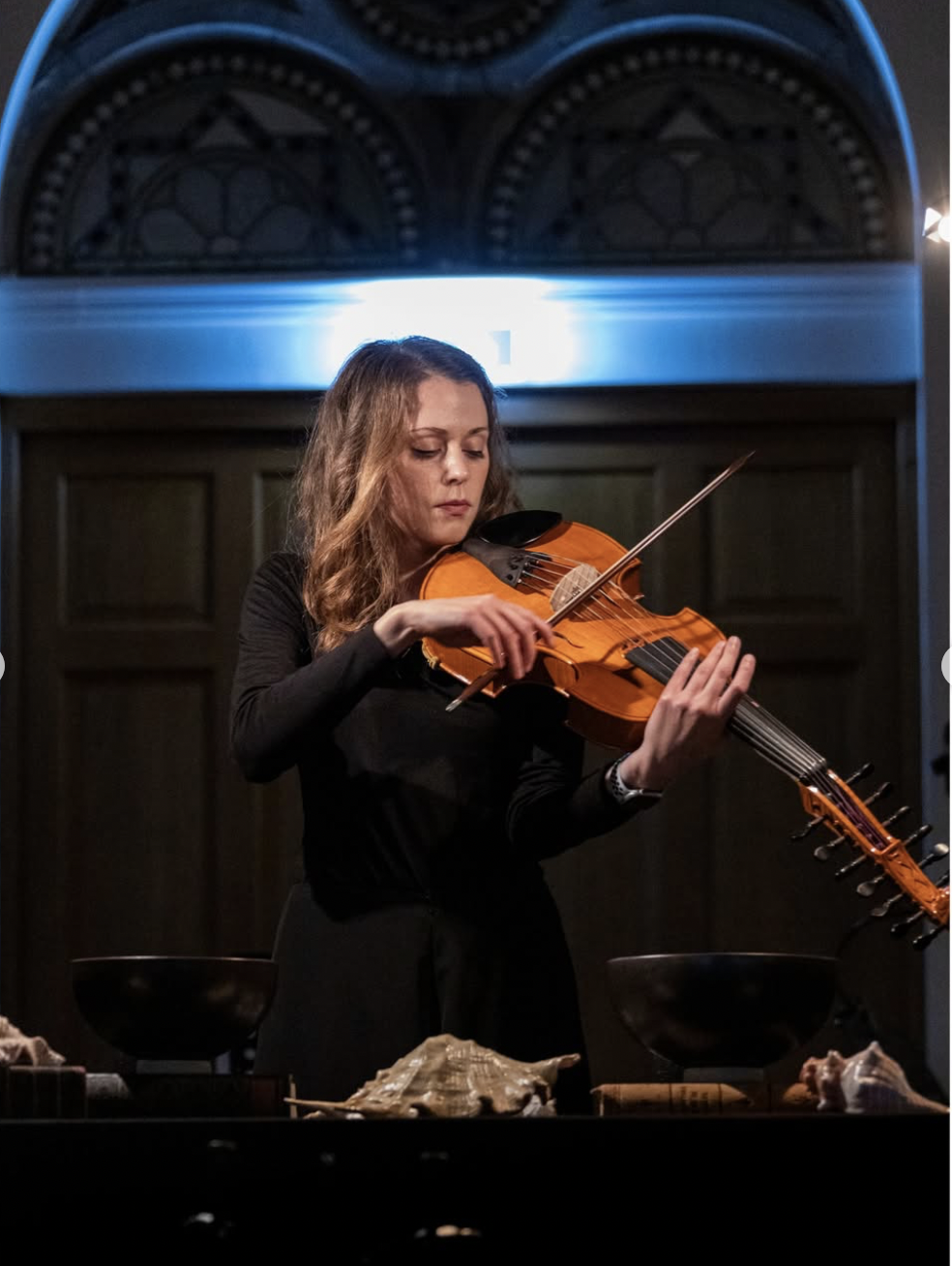
Leslee Smucker is a performer-composer utilising violin, voice, synthesisers, electronics, film, and poetry. For Rewire 2023’s Sensory Sensitive Concert, Smucker has developed the performance Worlds Within, a concert performance that evokes and invites discovery of sound within ourselves. Through this concert — suitable for stimulus-sensitive audiences — she invites the audience into sound worlds and resonances that reside within us by creating an environment conducive to listening, accompanied by resonances that invite deep listening and reflection. 

The concert takes the setting inspiration from a prehistoric cave, and  travels through six tableaus composed for solo violin using octave lower strings, mutes, low-rosined bows, and handmade ceramic resonators. The hope of the work is to celebrate what is usually unheard or unnoticed—illuminating resonances with our ancient selves.

Bowls made by Laurent Merchant

Commissioned by Rewire Festival


Mixed Messages (2019), violin, live electronics, answering machines

Mixed messages is an interactive sound experiment based on the tension between technology, communication, and human interaction. This semi-improvisatory, modular, sound collage has two parts. Part I runs through eight messages and builds layers by recording recorded and live sounds; streaming undercurrents from past massages as well as new techniques. As the messages progress, the recordings become more distorted; recording on top of recording, resulting in feedback, disintegration, and degradation of the message. The installation consists of cassette recordings placed throughout the audience. The audience can control which players are sounding at any given time by an on/off foot switch.

During the first part, I ask my audience to record messages on a portable tape recording during the performance. Part II is a live manipulation of the first half messages. In each half, eventually the tape loops, answering machines, violin, and voice change, degrade, dissolve, and modify.

The performance allows for audience members to consider their role in the performance; allowing for a rumination on non-verbal communication, and the degradation of message through technology.


Electric Fabric (2024), amplified prepared violin, fixed media, 15 min

Meshes (2019)

meshes.png

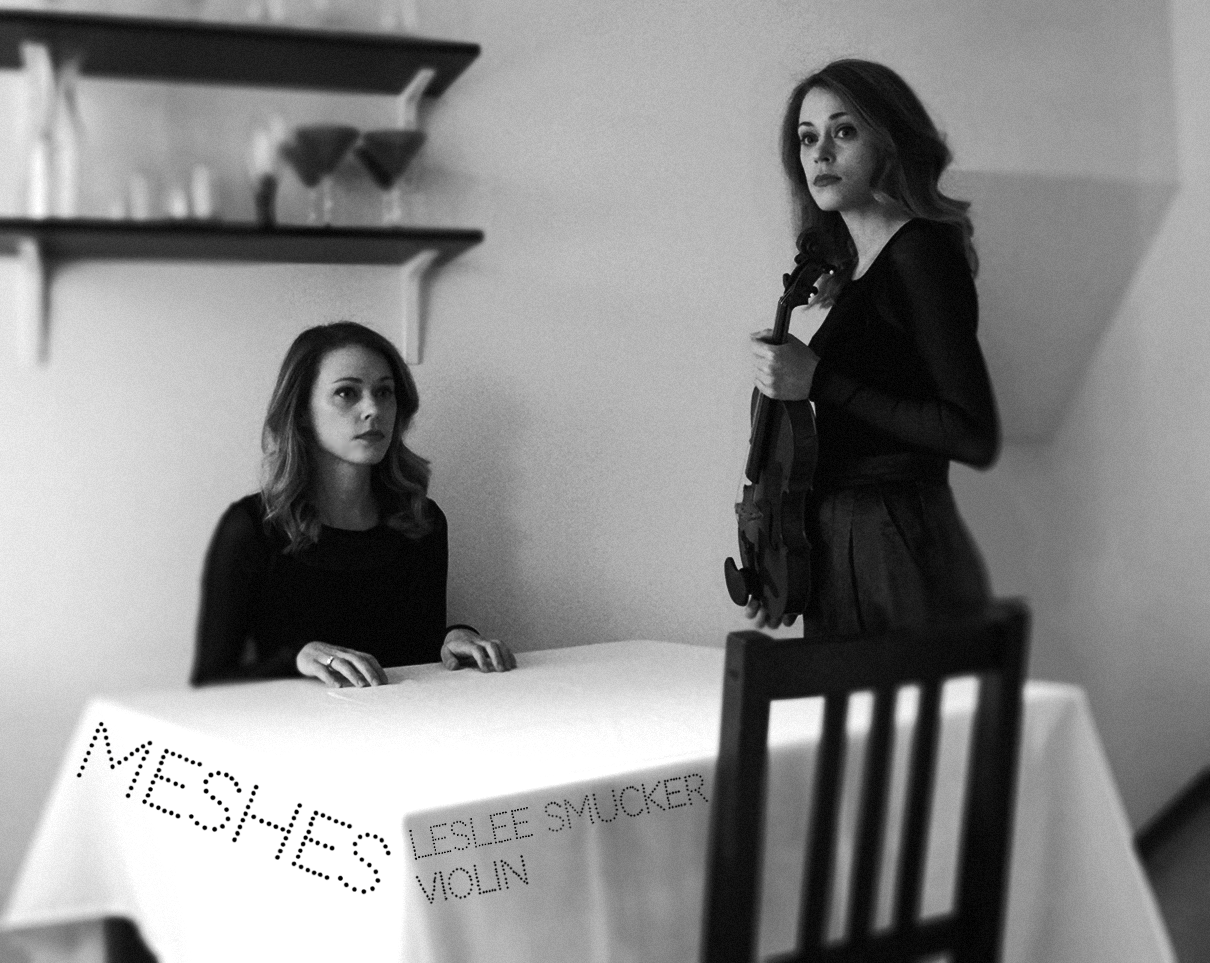
In her solo violin project “Meshes,” Leslee Smucker explores the strange and unnerving relationship between dream and reality by juxtaposing the music of Conor Abbott Brown, Lera Auerbach, Michel van der Aa, Locatelli, Giacinto Scelsi and film of Maya Deren. The film “Meshes of the Afternoon,” by Maya Deren is set neither in reality or dream, and it is the mesh and web of fugue-like sequences that is the impetus for the solo violin program entitled “Meshes.” Much of the musical works connect everyday actions with the psyche–symbolizing small-meaning occurrences through an artistic realm. The program “Meshes” develops themes surrounding dream and reality, and sound and silence–compelling the audience to experience the subliminal relationship between dream and reality.

Meshes is a solo violin program that incorporates film by Maya Deren, music by Luc Braeways, Grazyna Bacewicz, Lera Auerbach, Tera de Marez Oyens, Pietro Locatelli, Giacinto Scelsi, and more. Divided into four parts (titles taken from Sappho), the music and titles follow the flow of Deren's film. Video and audio by Leslee Smucker


Project: Personae (2016)

The live performance of Personae swings between moods; or persona. It has several components. First, the film which was made in collaboration with Jacob Landis-Eigsti. The film is in the form of the poetic sestina which includes six tercets and six overall sections. The concert is also in this form. The concert includes film from Stan Brakage’s The Dante Quartet, two commissioned musical works, and a poem by Jesse Nathan.

Personae: Album

This album is divided into “tercets” or groups of three works that include a musical work by Ezra Pound, a stanza from Jesse Nathan’s poem “Personae,” (specifically written for this project) and a contemporary musical work.  My intention is for the recording to be one cohesive listening experience, allowing each piece to be a comment on the previous and a transition into the next.

Released by Gega New in 2017, and distributed by Naxos Direct. 

Buy the album

David Saemann review from fanfare

Colin Clarke Review from Fanfare

"The CD’s sound engineering is excellent. Personae is a bewitching collection carefully chosen to elicit the poetic qualities in music and words. I found it captivating from the first time I heard it, and now at my fifth listening it strikes me as even more meaningful. I believe it stimulates the hearer to think of the genesis of music and poetic speech, and for this quality must be highly recommended." --David Saemann, Fanfare

Around Liminality: A Lecture on Transitions (2024)

Lecture on Transitions is a lecture-performance that explores the concept of liminality—in-between spaces or transitional moments that hold creative potential. In the work I consider the edges of experience where transformation occurs. Through examples from my own work—poetic interpretations of exterior happenings and others, like Bruce Nauman’s studio performances and Nono’s La Lontananza, I examine how the act of lingering in liminal spaces fosters a transition into a new way to think (or read, or perform).

Between 1967 and 1969, Bruce Nauman made a series of films of himself performing various mundane actions in his studio. These range from playing violin and pacing, bouncing a ball, stamping, and all of them usually include walking. In each of them the mundane becomes the subject. In the late 60s this kind of walking as performance art became fashionable—Robert Smithson, Nancy Holt, and others created works that incorporated some kind of walking. Lucy Lippard calls this the dematerialisation of the art object. kind of exploration of a threshold, both for the performer and, later, for the viewer.

Nauman’s works exemplify a transitory state with no clearly defined beginning or end. He walks the perimeter of his studio in an exaggerated fashion. In Lachenmann’s Toccatina for solo violin, the edges of sound are utilized as a microcosm of something that is 'almost.' The screw of the bow is used to create pitch, the hair of the bow is bowed everywhere but the strings. These sounds mostly associated with the ‘extraneous’ or on the perimeter, and without amplification, you may not even be able to hear the work.

What is beauty for you? I know what it is for me…sometimes (2024), prepared bass, 8 min


Silver Willow (2023), 8ch


BLACK the 10 (2022), 10 min, Wavefield Synthesis/8 channel reduction

is a theatre work for Wavefield Synthesis based on the collaboration of Argentinean painter Luis Tomasello (1915-2014) and poet Julio Cortázar (1914-1984). Negro el 10 is a booklet of ten serigraphs by Tomasello with ten stanzas by Cortázar for each serigraph. The prints are photos of Tomasello’s works from his Lumière Noire, acrylic on wood. Tomasello’s work relies on relief abstract qualities—forms are made from planes and squares. Many works comprise a single plane with slots cut to create a feeling of depth. From a few techniques, a vast array of effects are found in his work: edges of volumes and planes form features, the thickness varies—causing the surface to undulate, shadows are cast and move in accordance with the illumination of the shapes. Cortázar’s evocative poem brings many of these effects to life, dancing between physical qualities of the paintings and abstract conceptualism that the works exude. Cortázar’s prose is often situated in non-linear time, this cyclical nature is reflected in both the paintings and poetry. My theatrical portrait adds my own imaginary sonic tapestry to Tomasello and Cortázar’s work


Aeolian Duo (2022), for two sustaining instruments (amplification optional) and whirly tube players (audience on stage)

Aeolian Duo is a work designed to create a large wind-harp. inspired by a fascination I have with naturally occurring wind-harps, when I hear one, I usually record and document the event.

The score is both strict and free. It is wriDen for two sustaining instruments. The instruments must be able to create sustained tones that shiE in pitch and amplitude (so, naturally, no piano). The wind tube players are amplitude followers. half follow Instrument 1 and half others follow Instrument 2 (see tech rider). The wind tube players are purely reacting to the amplitude changes of their respective Instrument leader, so they are an extension of what their instrument leader is doing. Their reaction time will be slightly delayed, and this is how the piece is written and should be.

score excerpt


Tableau Vivant (2022), for bray harp, electronics, and transduced pedal harp* commissioned by Gaudeamus for Michela Amici

This work creates a speaking instrument(s) out of by-standing harps. With the help of transducers, one (or two) harps are transformed into their own aeolian objects—making music on their own. The small bray harp is amplified through a harp that resides on stage either to the right and/or left side of the performer.*

*If there is no access to another harp(s) a version of this work can be performed with two loudspeakers, although the theatricality and concept of the work will be greatly diminished.

I use Anne Carson’s translation of Sappho, If not, winter. Carson writes:

Sappho was a musician. Her poetry is lyric, that is, composed to be sung to the lyre. She addresses her lyre in one of her poems (fr.118) and frequently mentions music, songs, and singing. Ancient vase painters depict her with her instrument. later writers ascribe to her three musical inventions: that of the plectron, an instrument for picking the lyre (Suda); that of the pektis, a particular kind of lyre;...and the mixolydian mode, an emotional mode also used by the tragic poets, who learned it from Sappho. All Sappho’s music is lost.

The movements follow three fragments of Sappho’s poetry:

i. fr. 118 yes! radiant lyre speak to me // become a voice

ii. fr. 51 I don’t know what to do // two states of mind in me

iii. fr. 147 someone will remember us // I say // even in another time


home movie 01421126 (2021)

Soundtrack to home movie 0141126 from the Prelinger Archive. For stereo and film.


Land of Fertile Fields (2021)

A collaborative soundtrack to "Land of Fertile Fields" from the Preliger Archive for New Music Gathering. Soundtrack: Leslee Smucker, violin Ting Lou, piano Paul Safar, piano, melodica, percussion